
Featured Articles
2026-08-05
e-Vehicle Semiconductor to Exhibit at H2 & FC EXPO 2026 in Japan, Showcasing MEMS Hydrogen Sensing Technology
e-Vehicle Semiconductor to Exhibit at H2 & FC EXPO 2026 in Japan, Showcasing MEMS Hydrogen Sensing Technology
Automotive-Grade Reliability at the Core of Global Hydrogen Safety Monitoring
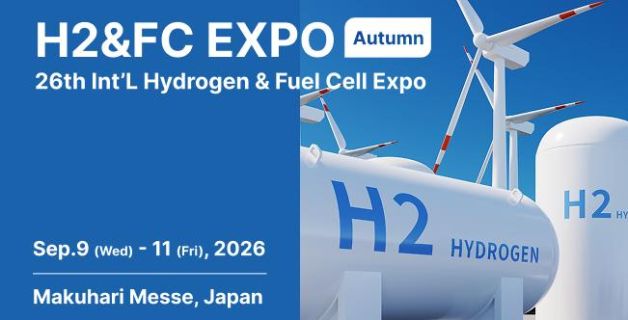
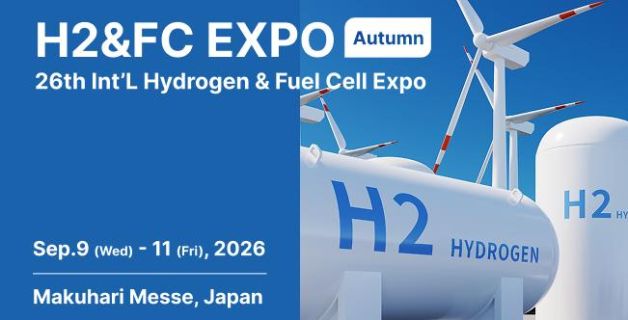
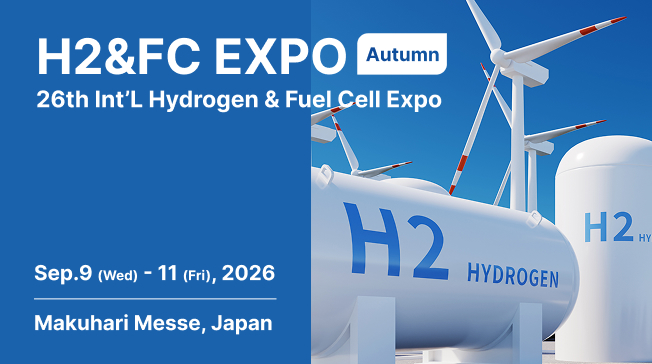
e-Vehicle Semiconductor Technology Co., Ltd. (“e-Vehicle”) today announced its participation in the H2 & FC EXPO — International Hydrogen & Fuel Cell Expo, to be held September 9–11, 2026 at Makuhari Messe in Chiba, Japan, as part of Smart Energy Week, one of Asia's largest energy industry exhibitions. At the event, e-Vehicle will present its latest R&D achievements in MEMS (Micro-Electro-Mechanical Systems) hydrogen sensing technology, alongside more than a decade of accumulated expertise in automotive sensing and power management components.
Integration Benefit 1
Lower Power Draw
Integration Benefit 2
Longer Lifespan
Integration Benefit 3
Smaller Footprint
Advancing Hydrogen Safety Monitoring: MEMS Sensing Technology Takes Center Stage
e-Vehicle's core technological strength lies in its MEMS (Micro-Electro-Mechanical Systems) design — integrating signal-processing and conversion circuitry (IC) with thermal-conductivity gas sensing functionality onto a single chip, rather than relying on separate sensing elements paired with external circuitry. This highly integrated MEMS architecture delivers three direct advantages for e-Vehicle's hydrogen sensing solutions: first, combining sensing and signal-processing circuitry significantly reduces overall power consumption; second, chip-level integration reduces mechanical wear and external-connection risk, effectively extending product lifespan; third, integrating sensing and processing functions on a single chip enables substantial miniaturization, resulting in a footprint far smaller than conventional discrete designs — well suited to space-constrained applications.
At the exhibition, e-Vehicle will share the technical architecture and design capabilities of its MEMS hydrogen sensing platform, demonstrating how its low-power, long-lifespan, and compact-footprint advantages address the detection needs of hydrogen production systems, hydrogen storage facilities, hydrogen supply chain equipment, AI power generation systems, semiconductor fabs, and a wide range of safety-critical hydrogen mobility applications.
“As the global hydrogen supply chain continues to scale rapidly, demand is growing for gas safety monitoring components that combine high precision, low power consumption, long lifespan, and a compact form factor. e-Vehicle will continue to deepen its investment in MEMS sensing technology, helping customers meet both regulatory safety requirements and operational efficiency as they build out hydrogen infrastructure.” — e-Vehicle Professional Product Team
Over a Decade of Automotive-Grade Track Record Builds International Trust
Since its founding in 2011, e-Vehicle has focused on the research, development, and manufacturing of automotive-grade sensing and power management components, building a comprehensive validation track record in hydrogen sensing:
2012
AEC-Q100 Grade Zero-certified IC EV8268 launched in the European market
2015
R&D team in Korea began development of automotive hydrogen sensors
2017
EV8268 achieved start-of-production (SOP) with a Japanese OEM customer
2019
EV8268 passed a 5-year / 100,000 km automotive-grade durability test
2020
Established a dedicated automotive “Hydrogen Sensor R&D Center” in Korea
2023
Launched the next-generation hydrogen sensor “EV9600,” designed from the outset to comply with IATF 16949 quality management standards and AEC-Q100 Grade Zero requirements
2024
Mass production for hydrogen sensors ensuring stable global supply
Together, these milestones reflect e-Vehicle's full-cycle capability — advancing hydrogen sensing technology from R&D through mass production under automotive-grade reliability standards.
Industry Partners Invited to Visit e-Vehicle's Booth
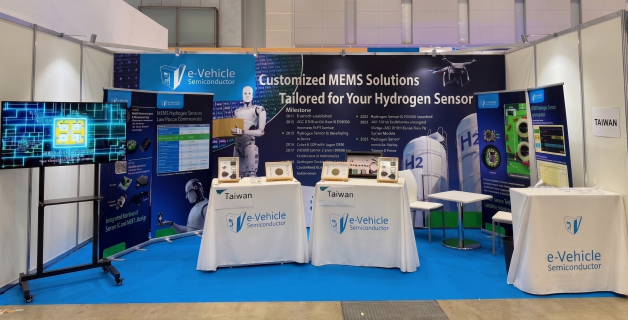
e-Vehicle's booth at H2 & FC EXPO 2026 will be built around the theme “Customized MEMS Solutions — Tailored Hydrogen Sensors for Your Business.” On-site, the company will present its MEMS hydrogen sensing technology platform and application case studies, with dedicated staff available for technical consultation. e-Vehicle warmly invites hydrogen industry partners, system integrators, and prospective collaborators worldwide to visit the booth and explore opportunities for customized sensing solutions.
Event Information
Exhibition
H2 & FC EXPO
International Hydrogen & Fuel Cell Expo
International Hydrogen & Fuel Cell Expo
Venue
Makuhari Messe, Chiba, Japan
Dates
Sep 9 (Wed) – 11 (Fri), 2026
10:00–17:00
10:00–17:00
Booth
E22-20

About e-Vehicle Semiconductor
Founded in 2011 and headquartered in the Hsinchu Science Park, Taiwan, e-Vehicle Semiconductor Technology Co., Ltd. specializes in the research, design, and manufacturing of automotive sensing technologies and power management components. Its product portfolio spans hydrogen energy sensors, Euro7 emission sensors (NOx sensors and common-rail pressure sensors), ignition and starting system components, and automotive power management ICs and modules. Guided by its brand ethos, “Professional Sensor for Vehicle,” e-Vehicle leverages Taiwan-based R&D and manufacturing to serve automotive and energy industry customers across Europe, Japan, Korea, and beyond — driving the future of green mobility through reliable sensing and control technologies.